

Ceiling Fans Are Not Decoration in the Philippines
- David
- Jun 3
- 3 min read
In the tropical climate of the Philippines, airflow plays a crucial role in home comfort and energy use. Many homeowners treat ceiling fans as mere decorative items or secondary accessories. This approach misses the point: ceiling fans can significantly improve comfort and reduce energy costs when placed and used correctly. Poor ceiling fan placement causes dead air pockets, uneven cooling, awkward shadows, and wasted air conditioning. Zillvek Builders Philippines understands this well and integrates ceiling fan placement with other design elements to create truly comfortable homes.

Why Ceiling Fan Placement Matters in the Philippines
The Philippines has a hot, humid climate year-round. Air conditioning is common but expensive to run continuously. Ceiling fans help circulate air, making rooms feel cooler without lowering the temperature. However, incorrect placement can reduce their effectiveness and increase energy costs.
Zillvek Builders Philippines considers several factors when planning ceiling fan placement:
Ceiling height: Fans need to be installed at the right height for optimal airflow and safety.
Seating layout: Fans should cover the main seating or activity areas to maximize comfort.
Window orientation: Fans can help move air from shaded to sunny areas, balancing temperature differences.
Lighting: Fans with integrated lighting should complement natural and artificial light sources.
Smart switches: Using smart switch Philippines technology allows better control of fan speed and timing, improving energy efficiency.
How to Plan Ceiling Fan Placement for a Comfortable Home Design
1. Assess the Room Size and Ceiling Height
A typical ceiling fan blade span ranges from 36 to 56 inches. Larger rooms need fans with longer blades or multiple fans. In the Philippines, many homes have high or vaulted ceilings, which require fans to be installed lower using downrods to maintain airflow effectiveness.
2. Position Fans Over Key Areas
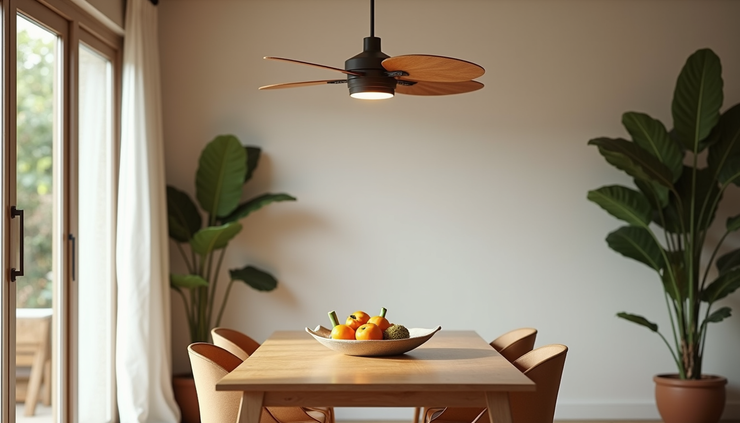
Fans should be centered over seating areas, dining tables, or workspaces. Placing a fan in the middle of the ceiling without considering furniture layout often leaves parts of the room with stagnant air. For example, a living room with a sofa set facing a TV should have a fan positioned to circulate air evenly over the seating.
3. Consider Window Orientation and Airflow Patterns
Windows facing east or west receive direct sunlight during parts of the day, causing temperature differences. Ceiling fans can help move cooler air from shaded areas to warmer spots. Zillvek Builders Philippines often designs airflow paths that complement natural ventilation, reducing reliance on air conditioning.
4. Integrate Smart Switches for Energy Efficiency
Smart switch Philippines options allow homeowners to control fan speed remotely or set schedules. This feature helps maintain a cost-efficient home by running fans only when needed. For example, a fan can be programmed to run at higher speeds during peak heat hours and slow down or turn off at night.
5. Match Fan Style with Tropical Home Design
Ceiling fans should blend with the room’s style without sacrificing function. Tropical home design often features natural materials like wood and bamboo. Fans with wooden blades or rattan finishes can enhance the aesthetic while providing effective airflow.
Benefits of Proper Ceiling Fan Placement in Tropical Homes
Improved comfort: Even airflow reduces hot spots and makes rooms feel cooler.
Energy savings: Fans allow higher air conditioning thermostat settings, cutting electricity bills.
Better lighting: Fans with integrated lighting can reduce the need for extra fixtures.
Enhanced aesthetics: Thoughtful placement supports the overall tropical home design.
Smart control: Smart switches add convenience and help manage energy use.
Practical Tips from Zillvek Builders Philippines
Use multiple smaller fans in large or irregular rooms instead of one large fan.
Avoid placing fans too close to walls or corners where airflow is blocked.
Combine ceiling fans with natural ventilation strategies like cross-ventilation.
Choose fans with reversible motors to switch airflow direction for different seasons.
Pair fans with smart switch Philippines devices for remote control and automation.
Creating a comfortable home design in the Philippines means thinking beyond decoration. Ceiling fans are essential tools for managing heat and humidity efficiently. Zillvek Builders Philippines shows that careful planning of ceiling fan placement can transform a home’s atmosphere and reduce energy costs.


Comments