

Bathroom Window or Mechanical Exhaust: What Should Shape the Layout?

When laying out a residential floor plan, one of the most persistent dilemmas is whether every bathroom must claim a spot along an exterior wall. In traditional Philippine residential construction, placing a toilet against an outside wall to fit an awning, casement, or jalousie window was considered standard practice. Today, compact urban lots, nearby boundary walls, multi-storey neighboring homes, and the desire for larger, brighter living spaces have made interior bathrooms with mechanical ventilation increasingly common.
Deciding between a bathroom window vs exhaust fan in Philippines home design comes down to balancing daylight and power independence against privacy, floor plan efficiency, and controlled moisture management. Neither option is universally superior; each solves distinct challenges while introducing specific spatial and operational tradeoffs.
Exterior Window, Mechanical Exhaust, or Both: The Core Tradeoff
The fundamental conflict lies in where you spend your prime perimeter wall space. The exterior envelope of any house is limited, especially on dense residential lots where clearance guidelines require building within a defined footprint. An exterior wall offers natural light, fresh air exchange without electricity, and passive drying during clear weather. However, dedicating perimeter frontage to a bathroom often means sacrificing a corner window in a bedroom, reducing daylight in the family sala, or pushing active living areas inward.
An internal bathroom allows the exterior perimeter to belong entirely to habitable rooms that family members occupy for hours at a time, such as bedrooms, living areas, and home offices. In exchange, an internal bathroom relies on mechanical ducting, an exhaust motor, and artificial lighting to remain usable, pleasant, and free of stagnant dampness.
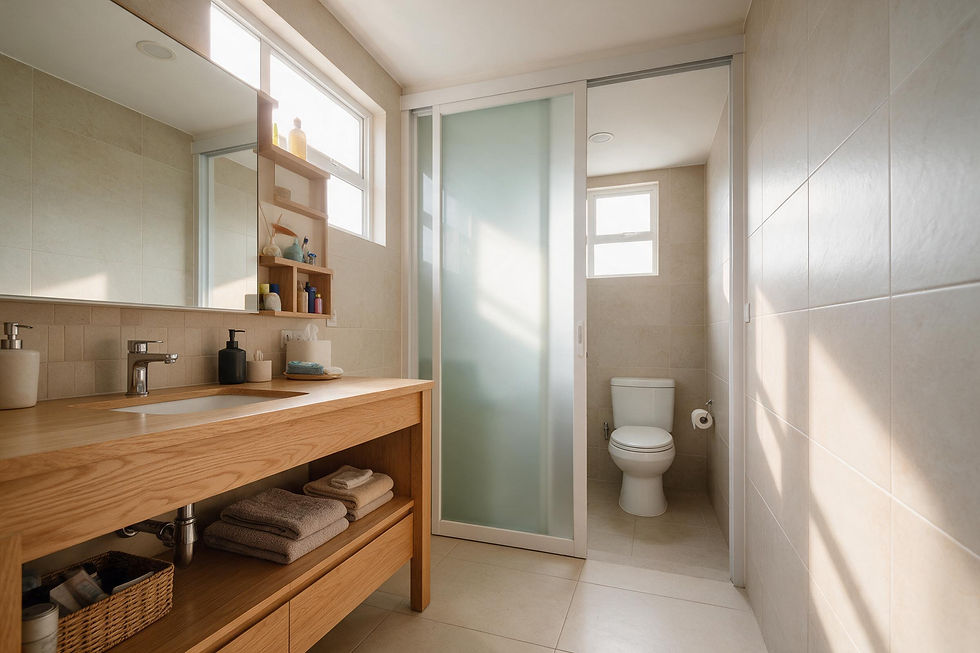
Homeowners are not restricted to an either-or choice. A third, highly practical approach is the combined option: placing the bathroom on an exterior wall with both an operable window and a powered exhaust fan. This hybrid arrangement allows the household to enjoy daylight and passive ventilation during fair weather or power interruptions, while relying on the exhaust fan to extract shower steam when driving rain, nightfall, or neighbor proximity requires the window to stay firmly shut.

Balancing perimeter wall space allows primary bedrooms to claim corner windows and natural daylight.
Privacy, Setbacks, and Neighbor Sightlines
Many homeowners choose an exterior window expecting effortless natural ventilation, only to find they can never comfortably open it. In Philippine subdivisions, narrow side yards often place perimeter bathroom windows directly opposite a neighbor's second-storey bedroom, a tall boundary firewall, or an adjacent service balcony. Homeowners should verify their property's actual boundary clearances and local subdivision guidelines before assuming a side-facing window will feel truly private.
Several privacy factors influence whether an exterior window actually performs as intended:
Sightlines and Frosted Glass: While translucent or frosted glass obscures direct vision, distinct silhouettes remain visible from outside when bathroom lights are turned on at night. Windows left cracked open for cross-ventilation can compromise visual privacy unless fitted with exterior angled louvers or positioned as high-level clerestory openings above eye level.
Acoustic Privacy: An open bathroom window lets personal sounds escape into narrow side alleys where neighbors, visitors, or household staff walk. Sounds from adjacent driveways, generator test runs, or pets also filter directly inside.
Neighboring Odors and Smoke: If the bathroom window opens toward a ground-level dirty kitchen, a laundry drying area, or an adjacent property's cooking vent, opening the sash may invite outdoor smoke and damp air into your private space rather than venting bathroom moisture.
When privacy concerns force a homeowner to keep an exterior bathroom window permanently shut and curtained, the window fails to provide its primary benefit of natural airflow, leaving the room vulnerable to trapped humidity.
Monsoon Humidity and the Limits of Natural Airflow
The Philippine climate brings high ambient humidity for much of the year, punctuated by intense monsoon rains (habagat) and tropical depressions. Natural ventilation behaves unpredictably under these conditions.
During weeks of continuous rain, exterior windows often must remain clamped shut to prevent wind-driven rainwater from soaking bathroom sills, baseboards, and ceiling boards. With windows closed, steam from a Modern Shower has no natural escape path. Without active air movement, warm moisture settles on mirrors, tiles, and grout lines, creating conditions that encourage black mold and mildew.
Mechanical exhaust fans are far less dependent on natural outdoor breezes than passive windows. A properly selected ceiling or wall-mounted fan pulls moisture directly from the wet zone and discharges it outdoors. However, mechanical extraction is not completely independent of weather or installation factors. Fan performance is influenced by duct friction, the availability of make-up air, exterior wind pressure pushing against the wall termination, and electrical supply. Furthermore, mechanical exhaust alone cannot keep surfaces dry in persistently damp, saturated tropical weather without regular cleaning, adequate room warmth, and proper surface drainage.
Duct Routing, Brownouts, and Electrical Practicalities
Opting for an internal bathroom requires careful planning of services that cannot simply be improvised during construction. The two most critical operational realities in the Philippines are duct runs and electrical reliability.
The Challenge of Duct Routing
An internal bathroom exhaust fan must expel air to the building exterior. Warm, moisture-laden air should never be discharged into an unvented attic space or ceiling plenum, as doing so leads to concealed rot, rusted steel framing, and mold growth across ceiling framing.
Planning for reliable ductwork requires:
Short, Direct Paths: Ducts should travel the shortest practical route to an exterior soffit or sidewall. Every elbow and bend adds static resistance, reducing airflow volume and increasing fan motor strain.
Ceiling Drops and Soffits: If the bathroom sits deep in the core of the house, structural beams often obstruct the duct path. Planning recessed ceiling bulkheads or coordinating duct penetrations during structural engineering prevents awkward drop-ceilings later.
Compatible Exterior Terminations: Select a weather-protected exterior termination designed for your specific duct diameter and fan rating. It is important to distinguish backflow prevention from rain protection: a spring-loaded or gravity damper prevents reverse drafts and wind wash, while a hooded, louvered cap deflects driving tropical rain. Any insect or pest screen fitted to the terminal must maintain sufficient free airflow area and remain accessible for periodic cleaning, as fine mesh screens can quickly clog with lint and airborne dust, severely restricting exhaust flow.
Power Outages and Electrical Readiness
Scheduled maintenance and sudden weather-related brownouts remain common across many Philippine provinces and cities. An internal bathroom during a daytime power interruption becomes completely dark and mechanically stagnant unless deliberate planning addresses these vulnerabilities.
Homeowners should distinguish between daytime illumination and powered ventilation during an outage:
Natural Lighting Provisions: A skylight or solar light tube can channel natural daylight into an interior bathroom, keeping it visually usable during daytime outages without electricity. However, daylight openings do not run the exhaust fan or remove steam.
Ventilation on Backup Circuits: A backup electrical circuit supplies power to an exhaust fan only when connected to an available, suitably sized backup energy source, such as a residential generator or a battery-and-inverter system. Establishing this connection requires appropriate electrical design, including safe transfer switching and proper sub-panel routing. Homeowners should also evaluate available system capacity, as the continuous draw of an exhaust motor must be weighed against critical brownout essentials like refrigeration, water pumps, and baseline lighting.
By contrast, a perimeter bathroom with an operable window allows a family to use the facilities under natural light and passive airflow during extended daytime blackouts without drawing on backup power.

Short, direct duct runs and dedicated electrical planning keep internal bathrooms functional and fresh.
Surrounding Layout: Why Internal Placement Often Protects Living Rooms
Deciding where the bathroom sits influences the comfort and flow of every room around it. Placing wet areas in the building interior is often a deliberate choice to enhance the quality of primary living zones, turning the house into a truly Convenient and Comfortable Home.
When exploring how the bathroom interacts with surrounding rooms, consider these layout relationships:
Bedroom Daylight Allocation: Placing en-suite bathrooms along the interior hallway wall allows bedroom sleeping areas to claim the exterior corners. This maximizes natural light, cross-ventilation, and garden views where family members spend hours resting.
Powder Room Access: A guest powder room is often best positioned near social areas rather than pushed to a distant exterior wall. Homeowners weighing powder room flow often explore Where Should the Powder Room or Common Toilet Go in a Filipino Home? to balance accessibility from the dining area with visual discretion.
Make-Up Air Flow: An internal exhaust fan creates slight negative pressure in the bathroom. For air to exhaust properly, replacement air must enter. Installing a louvered bathroom door, a bottom door undercut, or high wall transfer grilles allows replacement air to flow in smoothly, preventing the exhaust fan from straining against a sealed room.
Making the Right Choice for Your Floor Plan
To determine which approach suits your build, evaluate your specific lot and daily household routines rather than following generic design assumptions.
A bathroom window is only as good as the space it faces outside; if privacy or driving rain keeps it shut, it functions merely as a piece of glass rather than a ventilation system.
An exterior wall window works best when:
The bathroom faces an open, private rear yard, internal courtyard, or wide setback free from neighbor sightlines.
The bathroom is on an upper floor where high clerestory windows can catch breezes without sacrificing modesty.
The house is located in an area with frequent, extended power outages where mechanical dependence creates daily friction.
An internal bathroom with mechanical exhaust works best when:
The lot is narrow, and every meter of exterior wall is needed for bedroom windows, living room daylight, or home office cross-ventilation.
The exterior side setbacks face direct neighbor windows, narrow boundary walls, or service zones with cooking smells and laundry humidity.
The household prioritizes rapid, active moisture removal directly over the shower enclosure rather than relying on fickle outdoor drafts.
A homeowner weighing whether to push a bathroom to the perimeter wall, enclose it centrally, or combine both solutions may want to discuss the layout through Zillvek Builders' Customised Design service, since customised home design should respond to the household's routines, comfort, protection, budget, and long-term use. By evaluating how the entire floor plan balances perimeter daylight, utility routes, and daily privacy, families can settle on an arrangement that remains easy to maintain through years of changing weather and household routines.
Ultimately, neither an exterior window nor an exhaust fan is universally superior. When windows are chosen, they perform best when facing quiet, private outdoor zones with adequate boundary distance. When mechanical exhaust is chosen, duct runs should remain direct, power backup requirements planned, and adequate make-up air provided. Thoughtful planning supports long-term privacy and moisture management, helping the household maintain a comfortable, functional bathroom through changing seasons and daily routines.

Assessing daily household routines and property boundaries clarifies whether a window, exhaust fan, or both fit best.


Comments