

Stay at Home or Move Out During a Major Renovation?

Deciding whether to remain at home or relocate during a major house renovation comes down to a clear threshold: can your household preserve an isolated, fully functional living zone with reliable water, electricity, sanitation, and physical safety? If a project requires removing the roof, knocking down structural hollow-block walls, re-routing primary drainage lines, or rewiring the main service panel, living at home during major renovation Philippines conditions quickly shifts from a minor inconvenience to an unworkable daily struggle.
Conversely, when a renovation is isolated to an independent extension, a detached service quarter, or an upper floor while the ground floor remains completely intact, staying on-site can spare a family substantial rental and moving expenses. Making the right choice requires looking past initial optimistic assumptions and assessing how daily domestic life actually collides with active construction work.
The Practical Boundary Between Staying and Moving Out
The scope and physical location of the work determine whether remaining on the property is sensible. Minor remodels or surface cosmetic upgrades rarely require leaving. However, major renovations that disturb primary building infrastructure create ripple effects throughout the entire structure.
Before deciding to stay, verify whether the following baseline conditions can be maintained continuously:
At least one fully plumbed, private bathroom that does not share access routes with construction personnel.
A safe, clean cooking and dining setup, even if scaled down to a temporary outdoor kitchen or basic pantry counter.
Continuous electrical and running water service, outside of brief, pre-scheduled shutoffs for connections.
A reliable physical separation that completely isolates living quarters from hazardous dust, fumes, and active trade traffic.
If the planned work cuts through the primary plumbing stack, exposes living spaces to seasonal rain, or leaves the house without secure external walls overnight, temporary relocation is not a luxury—it is a functional necessity. Families facing structural overhauls often evaluate this balance alongside the wider choice to renovate or rebuild, where the total disruption of stripping an older home may rival that of starting anew.

Clear physical separation between active construction and living areas determines whether staying on-site is realistic.
Dust, Fumes, and Air Quality in a Warm Climate
Many homeowners underestimate the sheer volume and penetrating ability of masonry dust. In Philippine residential construction, modifying walls typically involves chipping concrete hollow blocks, grinding plaster, and cutting tiles or structural reinforcement. The resulting fine crystalline silica dust settles on furniture, infiltrates closed wardrobes, and clogs electronics.
In a tropical climate, managing this dust creates a difficult dilemma. If you close your windows to block construction debris, indoor temperatures soar. If you turn on split-type air conditioners in adjacent rooms, the indoor fan coils quickly suck in airborne cement particulates, choking filters and coating cooling coils. Running air conditioning in a dusty home without dedicated containment and heavy filtration can lead to frequent maintenance issues and compromised indoor air quality.
Furthermore, finishes such as solvent-based primers, oil wood stains, waterproofing membranes, and lacquer thinners produce strong volatile organic compounds. In homes where prevailing breezes pass through living areas, these vapors cannot be entirely kept out of bedrooms. For households with family members who have asthma, allergies, or respiratory vulnerabilities, remaining inside the building during active chipping, grinding, and chemical application poses serious health concerns.
Bathrooms, Cooking, and Utility Interruptions
A family can endure a crowded bedroom for weeks, but the breakdown of basic sanitary routines causes immediate friction. When living through a renovation, daily comfort hinges on utility availability.
Plumbing Downtime and Water Pressure
Upgrading bathrooms or altering a kitchen layout rarely happens without shutting off the main water line. In many local neighborhoods where municipal supply relies on booster pumps and overhead or ground cisterns, moving or adjusting plumbing lines can knock out pressure to the entire house. If the house only has one or two bathrooms and both are within the work scope, staying on-site forces awkward compromises that disrupt morning work and school routines.
The Cooking Challenge
Renovating a main kitchen leaves a household reliant on delivery, dining out, or setting up a makeshift station. A dirty kitchen or covered lanai can serve as an effective temporary cooking area if it has a sink, an LPG hookup, and sheltered prep space. However, if food preparation must shift entirely into a sala with an electric hotplate and washing dishes in a bathroom lavatory, meal costs rise and nutritional habits suffer within just a couple of weeks.
Electrical Line Splices and Panel Upgrades
Increasing power capacity, adding sub-panels, or running new circuits requires cutting off power. In warm weather, unexpected day-long power cuts mean no electric fans, no refrigeration, and no Wi-Fi. If your household relies on steady power for refrigerated medicines or daily work, prolonged panel modifications make staying at home significantly more demanding.
Family Routines, Noise, and Child Safety
Noise levels on an active job site are unrelenting. Chipping hammer drills, angle grinders cutting steel bars, tile cutters, and compressor motors create sustained sound levels that easily travel through shared concrete slabs and hollow-block partitions.
For households with family members working from home, students attending online classes, or infants needing daytime naps, working through this noise environment is exceptionally challenging. Concentrated work becomes difficult, and virtual meetings frequently pick up heavy mechanical vibration.
Physical safety is an even greater concern when children or curious pets share the property. Construction zones carry hidden hazards:
Discarded formwork boards with protruding rusty nails.
Open floor penetrations, rough electrical wiring, and wet chemical mixing pans.
Scaffolding ladders and unstable stacks of sand, gravel, and hollow blocks.
While responsible contractors clear their work areas at the end of each shift, dust and small sharp debris inevitably spread across shared pathways. Constant vigilance is exhausting for parents, especially when children are confined to small indoor sections for extended periods.
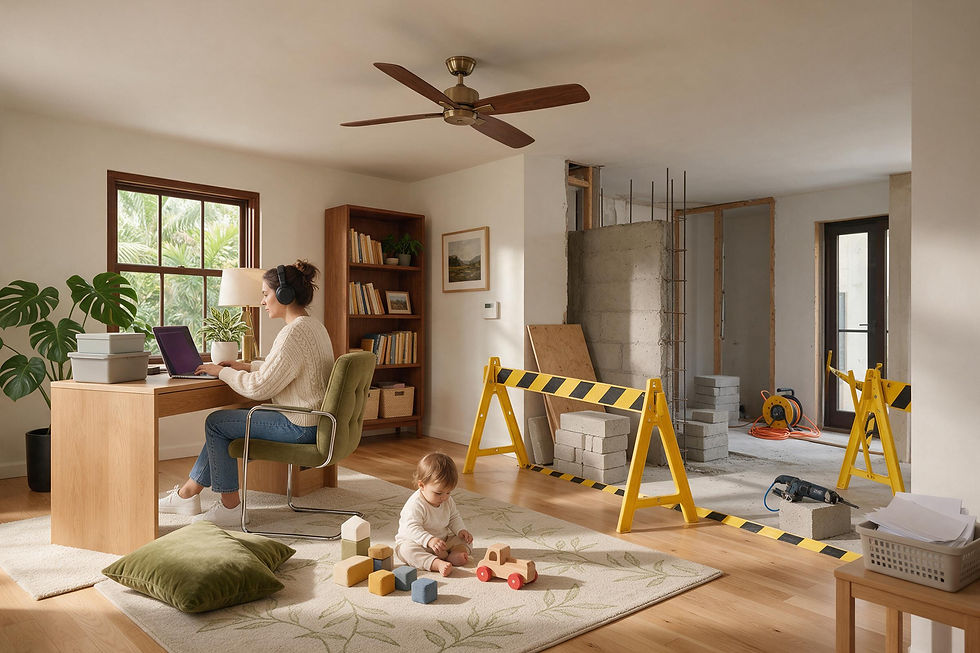
Noise from masonry chipping and angle grinders makes regular work and study routines difficult to sustain.
Site Security and Daily Boundary Control
Staying in your home during construction alters your household privacy and access control. Throughout the day, tradespeople, delivery trucks, and material haulers will move across the driveway and perimeter gates.
If you remain living on-site, you must establish an uncompromising security boundary between your private quarters and the work area. This involves changing keyed locks, bolting intermediate access doors, and keeping daily valuables completely isolated from rooms where workers have regular access. Subdivision gate passes, contractor vehicle permits, and identity checks also require ongoing coordination. If the project leaves exterior walls or perimeter fences opened up for extended periods, the home loses its primary protective shell, requiring dedicated night watch or temporary boarding to prevent intrusion.
Weighing Temporary Rent Against Living Disruption
Homeowners often decide to stay because they wish to avoid the direct expense of renting a nearby house or condominium unit during the project. Renting an apartment, paying security deposits, handling moving fees, and securing off-site storage represent substantial out-of-pocket costs that must be factored into your construction budget planning.
Yet remaining at home incurs secondary expenses that deserve equal calculation:
Productivity Losses: Missed work hours, disrupted sleep, and compromised remote-work setups erode earnings or strain employment.
Dining and Daily Convenience: Relying heavily on takeout, pre-cooked meals, and disposable tableware due to an inaccessible kitchen gradually accumulates significant household expense.
Frequent Deep Cleaning and Maintenance: Increased aircon servicing, frequent laundry runs to clear settled dust, and premature filter replacements add ongoing maintenance costs.
Work Sequencing and Contract Terms: Maintaining occupied zones may require a contractor to stage work in smaller sections, demobilise tools daily, or restrict loud tasks to narrower work windows. While this can extend the construction calendar, whether it generates additional supervision or overhead fees depends entirely on your agreed scope and contract terms. Homeowners should request separate schedule and cost projections for occupied versus vacant conditions to compare the trade-offs clearly.
To make an objective decision, write down actual rental quotes, utility deposits, and moving expenses for the estimated displacement timeline. Compare that total against your own realistic estimates for dining, extra cleaning, travel, and potential work disruptions if you remain. In many instances, the difference between the two numbers is much smaller than expected, making temporary relocation the more practical path for family wellbeing.
Homeowners weighing temporary accommodation against the disruption of a major renovation may want to discuss their space requirements through Zillvek Builders' Customised Design service, since customised home design should respond to household routines, protection, comfort, and budget.
Measures to Take If You Decide to Stay On-Site
If moving out is impractical or if you decide to execute the renovation through a phased building approach, systematic staging is essential. However, staying on-site should only proceed if qualified personnel evaluate the property and confirm that dust containment, air movement, and structural safety can be reliably managed throughout the active phases.
Taped plastic sheets or lightweight plywood partitions alone do not make an occupied room safe during heavy demolition, concrete cutting, or power grinding. Microscopic silica dust moves readily through minor air gaps, drafts, and shared ceiling cavities. If hazardous dust, paint vapors, or waterproofing fumes cannot be reliably isolated using source controls—such as wet-cutting equipment, local tool extraction, and directional exhaust fans that vent directly outdoors away from living spaces—temporary relocation during those specific high-risk milestones is the only responsible safety choice.
When on-site separation is confirmed safe and feasible by your project team, implement the following protocols:
First, establish rigid physical containment. Combine mechanical source-level dust extraction with solid, sealed stud walls around the active zone. Seal all shared air-conditioning ducting, ceiling returns, and floor gaps connecting the renovation space to your family quarters.
Second, designate an exterior-only access route for construction workers so they never enter personal foyers, interior hallways, or shared family rooms. Trades should have a designated entrance, staging zone, and sanitary facility set up outside your private living envelope.
Third, agree with your builder on firm quiet hours and utility coordination in writing. Ensure scheduled water or power interruptions are announced at least twenty-four hours in advance so your family can store water and charge backup power supplies. Setting predictable start and end times for heavy mechanical work helps household members organise work shifts, children's schedules, and essential rest.
Living through a major home renovation is feasible under the right physical conditions, but it should never be chosen by default. By evaluating dust control, utility independence, child safety, and actual economic trade-offs, you can make a measured choice that preserves your family's daily comfort and long-term health.

Rigid barriers, source dust control, and exterior ventilation are vital if remaining in the house during construction.


Comments