

The Drain Cover Should Not Be a Monsoon Afterthought
- David
- 1 day ago
- 5 min read
Most homeowners do not think much about a drain cover until the first strong monsoon rain. Before that, it looks like one of those forgettable pieces of sitework: a metal grate, a concrete opening, something you walk over without noticing. Then the rain starts, water splashes into the walkway, leaves gather in the corner, the service area smells a little off, and the detail you ignored becomes part of your daily route.
That is exactly why drainage deserves design attention in Philippine homes. In a country where rainy season runoff is intense, lots are often tight, and boundaries sit close to the house, a drain cover is not just hardware. It affects comfort, cleaning, safety, and even how the home feels to live in. Zillvek Builders often treats drainage as part of the architecture rather than an afterthought, because a calm home starts with details that do not keep asking for attention.
Where bad drain-cover placement causes daily friction
In many homes, drainage problems do not begin with a big flood. They start with small annoyances that repeat every week. A drain cover placed too close to a walkway can throw water back onto your feet when rainwater rushes through it. A narrow side yard can trap leaves, soap scum, and silt if the cover is hard to reach or too small for proper cleaning. A drain near the kitchen or laundry area can carry odor back into spaces where people gather, especially when the trap is poorly planned or the line dries out during hot weather.
These are not dramatic failures, but they affect how the house works. Filipino families use outdoor and semi-outdoor spaces heavily: washing areas, dirty kitchens, service yards, garage edges, and covered walkways all see regular water flow. In dense neighborhoods, runoff from one lot can also affect the next one, so drainage needs to be planned with the real site, not with a generic plan that assumes more room than you actually have. That is where Customised Design matters. The right drain cover is not chosen in isolation; it is placed according to slope, access, use, and how people actually move through the home.
How slope, access, and cleaning space should work together
A practical drain cover does three jobs at once. It catches water without creating splash-back. It allows debris to be removed quickly. And it sits in a location that makes maintenance easy instead of annoying. If any one of those is ignored, the homeowner ends up doing more work later.
Slope is the first part. Water should move naturally toward the drain instead of lingering around it. If the floor or paving is almost flat, rain will find the lowest unintended point, which is often the path you use most. In the Philippines, where downpours can arrive fast and hard, even a small misread in slope can turn a side yard into a shallow channel or a garage edge into a puddle zone.
Access is the second part. A drain cover should be easy to lift, inspect, and clean without forcing someone to use improvised tools. If the opening is buried under decorative gravel, tight edging, or a planter that has grown too close, the drain becomes harder to maintain and therefore more likely to clog. Good design gives the homeowner a clear path to service the drain without damaging nearby finishes.
Size is the third part. A cover that looks neat but is too small can trap debris faster than it clears water. That matters in places with falling leaves, roof runoff, and the kind of dust and grit that gathers along walls and boundaries. This is why drainage should be considered alongside other parts of the envelope, including gutters and downspouts. If those systems all discharge into one crowded spot, the drain cover becomes overloaded no matter how well it was made.
When Zillvek Builders plans a home, details like these sit inside the broader flow of the house. The goal is not to make drainage visually loud. The goal is to make it perform quietly so that the home feels cleaner, drier, and easier to live with. That is the same mindset behind a Beautiful Well-Planned Home: finishes should look intentional, but they should also work with the climate instead of pretending the climate is mild.
What a practical Philippine home does differently in monsoon weather
In a climate with long wet seasons, you do not design drainage only for emergencies. You design it for everyday life. That means thinking about where people will walk after the rain, where children might step barefoot, where laundry water will flow, and where mud will be carried in from outside. A drain cover that is technically correct but unpleasant to step near is still a bad detail.
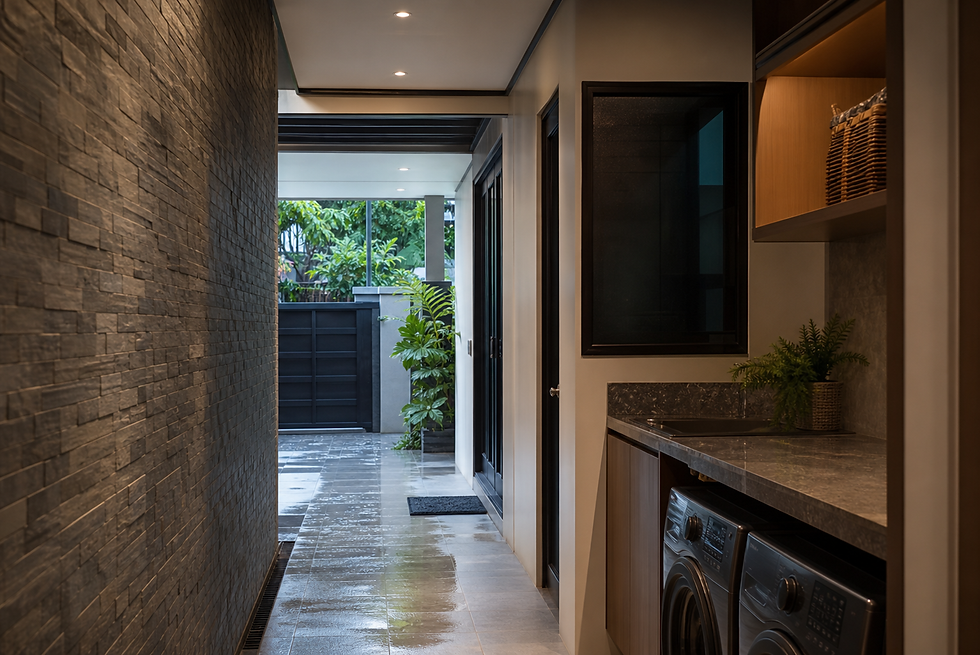
A better approach keeps wet work zones organized. The drain should be positioned so that washing areas empty efficiently, service yards dry out faster, and walkways stay readable even during heavy rain. If the home has a narrow side passage, the cover and slope should work together so water does not jump back into the path or sit against the wall. If the home has a garage or covered outdoor area, the drainage should be able to handle the mess that comes from tires, shoes, and rain carried in from the street.
This is also where maintenance-friendly design matters in multigenerational homes. Older family members should not have to lean awkwardly over a hard-to-open grate. House helpers should not need a complicated routine just to keep a drain clear. Children should not encounter slippery puddles at the edge of a service area because the cover is too shallow or the slope is too aggressive. Small choices make the home feel safer for everyone.
That is why drainage belongs in the same conversation as comfort and protection, not only construction. A house can have beautiful finishes and still feel tiring if the exterior edges are always wet, smelly, or hard to clean. A home designed for real Philippine living should be prepared for the monsoon without making the site look industrial. The best drainage details stay almost invisible when they are doing their job well.
Drainage is part of a calm home, not just the groundworks
When drainage is planned early, the house becomes easier to live in. Walkways stay cleaner. Outdoor washing zones dry faster. Bad smells are less likely to drift into kitchen and service spaces. Rainwater has a clearer path away from the home instead of pooling where people walk or store things. And when maintenance is needed, the drain is easy to find, easy to open, and easy to clear.
That kind of result rarely comes from a single product. It comes from coordination: slope, gutters, boundaries, cover size, access, and the way the house is actually used every day. It also comes from a builder mindset that respects these details before the concrete is poured. Zillvek Builders approaches homes that way because a custom home should not only look finished on move-in day; it should still feel sensible when the first heavy rain arrives and keeps arriving for months.
If you are planning a home in the Philippines, treat the drain cover as part of the design conversation from the start. It is a small piece of the house, but it affects whether the property stays dry, clean, and comfortable through the season when it matters most.
That is the difference between a home that merely survives monsoon weather and one that stays calm through it. For many Filipino families, that calm is the real luxury.
For more on how thoughtful planning improves everyday living, see Convenient and Comfortable Home, Well-Protected Home, and Actual Projects.


Comments